Showing posts with label Clementoni. Show all posts

Monday, January 27, 2014

All that was lost, is found

Leonardo di Vinci: Annuciation - Clementoni, 13,200pcs
ebay, aug 2013  $200USD
Never underestimate the ability of the government to screw things up. After a very very long delay, two things have shown up. The 13,200 piece Clementoni puzzle of Leonardo's Annunciation finally showed up after it was shipped nearly 6 months ago from Germany!

This puzzle is certainly in the top 10 rarest big boy puzzles of all time and beautiful. It was bought used, one bag open and hopefully all is well.

Also, our puzzle collection and the rest of our belongings have found there way to us despite being told by the USPS that they were lost and to file an insurance claim! Today I have to go pick them up from Mountain View, CA. Exciting times.

It looks like the wife and I might be moving to Berkeley, CA while we chase the all mighty dollar. We also found the San Francisco Jigsaw Meetup group and hope to do some puzzling with them soon!

Oh yeah, we did something really fun yesterday, we went roller skating in Golden Gate Park! All this time I never knew this was there. So fun!

-Cheers
M getting her Skate on!

Tuesday, August 20, 2013

New Puzzle Day!

The collection is getting out of hand!
We have been slowing down on the puzzle purchasing, but there are just a few more that have shown up recently! Here they are including the first over 10,000 piece puzzle!

I am really glad the Neuschwanstein Castle is in great shape! This is really an important puzzle as it Ravensburger crushed the competition with this puzzle and remained the undisputed champion of the large puzzle scene for nearly 20 years! The bags of pieces are unopened and I unless I have some sort of change of heart, they will be assembled one bag at a time, there is  a LOT of scenery in this puzzle!

We have never done a 3D puzzle so we figured we would start with the worlds largest one! I guess we were inspired after watching the animation of it being put together!

I look forward to the Clementoni puzzles, they seem to be very well done!

New Puzzle Day: Neuschwanstein Castle
Neuschwanstein Castle - 12,000pc, Ravensburger
Purchased from ebay for $275 on 7/28/2013
New Puzzle Day: New York 3D
New York 3D - 3,141pc, Wrebbit
Purchased from ebay for $76 on 7/16/2013
New Puzzle Day: Dolomites
Dolomites - 6,000pc, Clementoni
Purchased from ebay for $20 on 7/14/2013
New Puzzle Day: Zodiac
Zodiac - 6,000pc Clementoni
Purchased from ebay for $53 on 7/9/2013

Monday, August 12, 2013

Wedding Feast at Cana: Day 16

IMG_3010
Slow but Steady progress!

I finally got a few hours at the table today. I managed to hunt for and place about 20 red pieces and decided to orphan them and move onto orange. After organizing by shape, I was able to place somewhere around 80 pieces for about 100 piece day... It is painfully slow going for me, I prefer piece counts much nearer 500 but lately the time has been short. Anyhow, here is todays progress.

In other news, we have a new Puzzle Building Service project! We are building the 6000pc Creation of Man by Clementoni for someone in Hong Kong! Customs has the puzzle here in St. Thomas so it wont be long! We look forward to working on this one a lot! It's fantastic that the puzzle came all the way from the other side of the world for us to build it for someone! We could not be happier! What's even more awesome? We have been paid in advance with the 18,000pc - At the Waterhole puzzle for our efforts!

We are certainly going to be busy!

- Tom and Mercedes!

We offer a puzzle building service and are building this one for our friend in Hong Kong! It is the 6000pc Creation of Man by Clementoni.

Our newest puzzle to the collection, Ravensburgers 18,000pc At the Waterhole by David Penfound.


Tuesday, July 9, 2013

Sacred and Profane Love

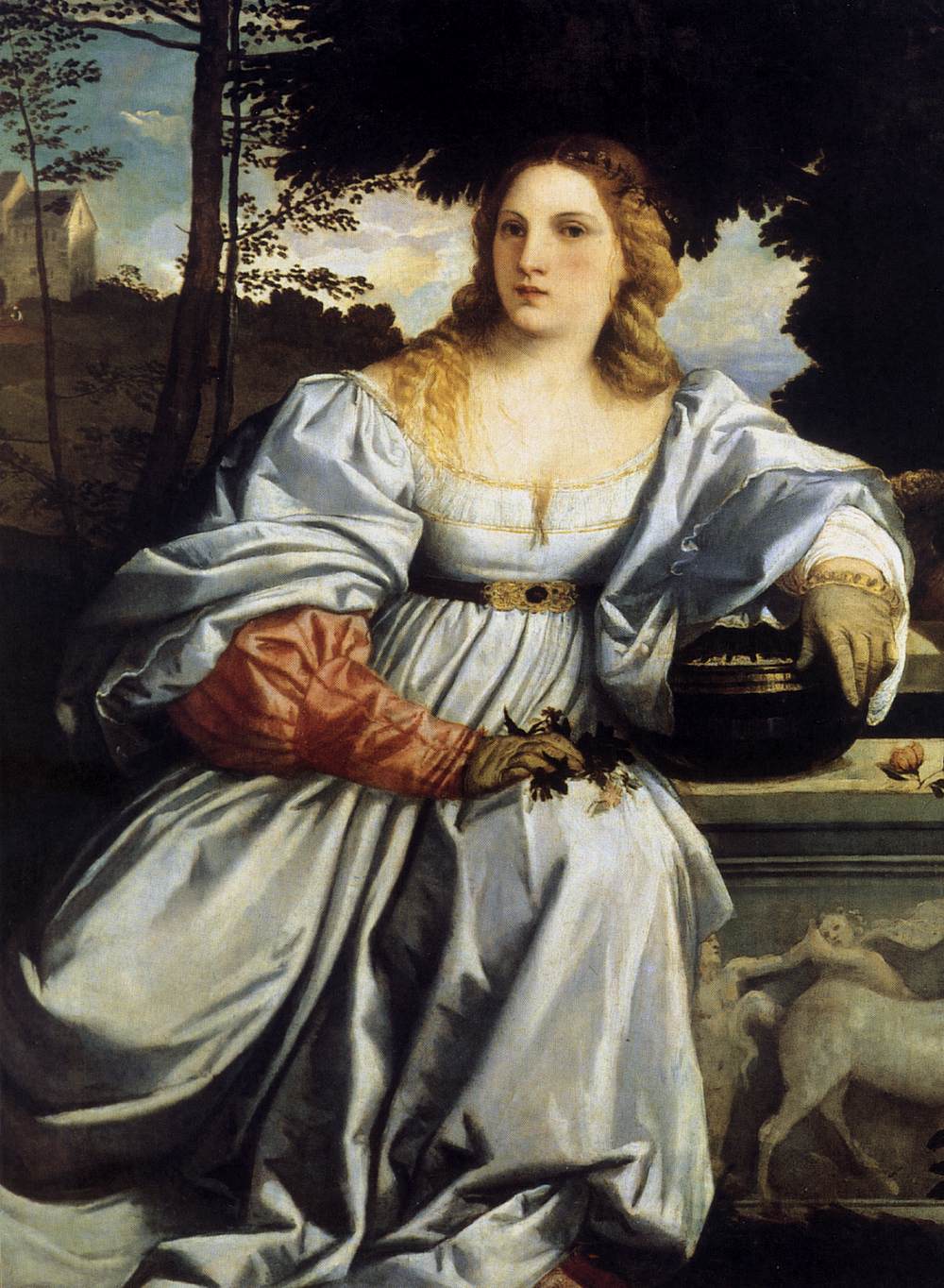
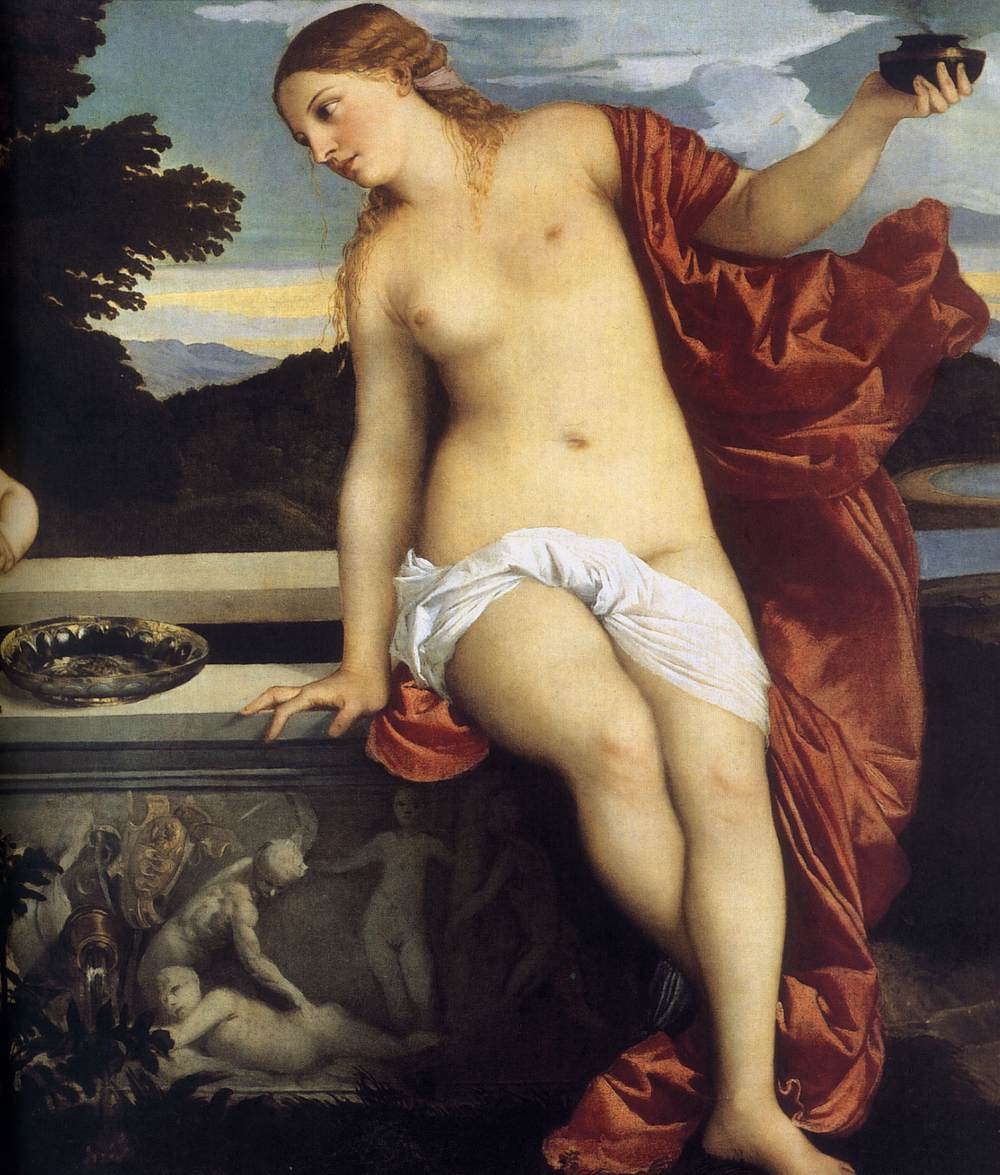
Titan: Sacred and Profound Love - 13,200pc by Clementoni
I dont normally post about puzzles we just purchased, but I am really excited about this one! This was the puzzle that unseated Ravensburger as the worlds largest puzzle after nearly 20 years as the reining king of large format puzzles. Clementoni choose Titan's Sacred and Profane Love to topple the record with 13,200 pieces and so started a series that has grown to 8 puzzles.

This puzzle is fascinating but lets not take my analysis of it. I found a great analysis form Walks of Italy. The following is from http://www.walksofitaly.com/blog/art-culture/sacred-profane-love-titian-mysteries:

Titian’s Sacred and Profane Love is the gem of Rome’s Borghese gallery… and one of the most famous paintings of Renaissance Italy. It’s so beloved, in fact, that in 1899, the Rothschild family offered to pay the Borghese Gallery 4 million lira for the piece—even though the gallery’s entire collection, and the grounds, were valued at only 3.6 million lira!

Perhaps the painting is so famous simply because of its beauty and because it’s a masterpiece by the Renaissance great Titian.

Or perhaps people have fallen in love with it because of its hidden secrets and symbolism—much of which art historians still don’t completely understand!

There’s a lot of mysterious stuff going on here.

At first glance, the painting might just look like another portrait of two lovely ladies, with a pastoral background behind them.


Look again.


First of all, there are the women themselves. One is clothed, bejeweled, and—seemingly—made up with cosmetics. She’s wearing gloves, and holding a plant of some kind. The other is (almost) stark naked, holding just a torch.

The church and the pasture in Sacred and
Profane Love
The church and pasture in Sacred and Profane Love

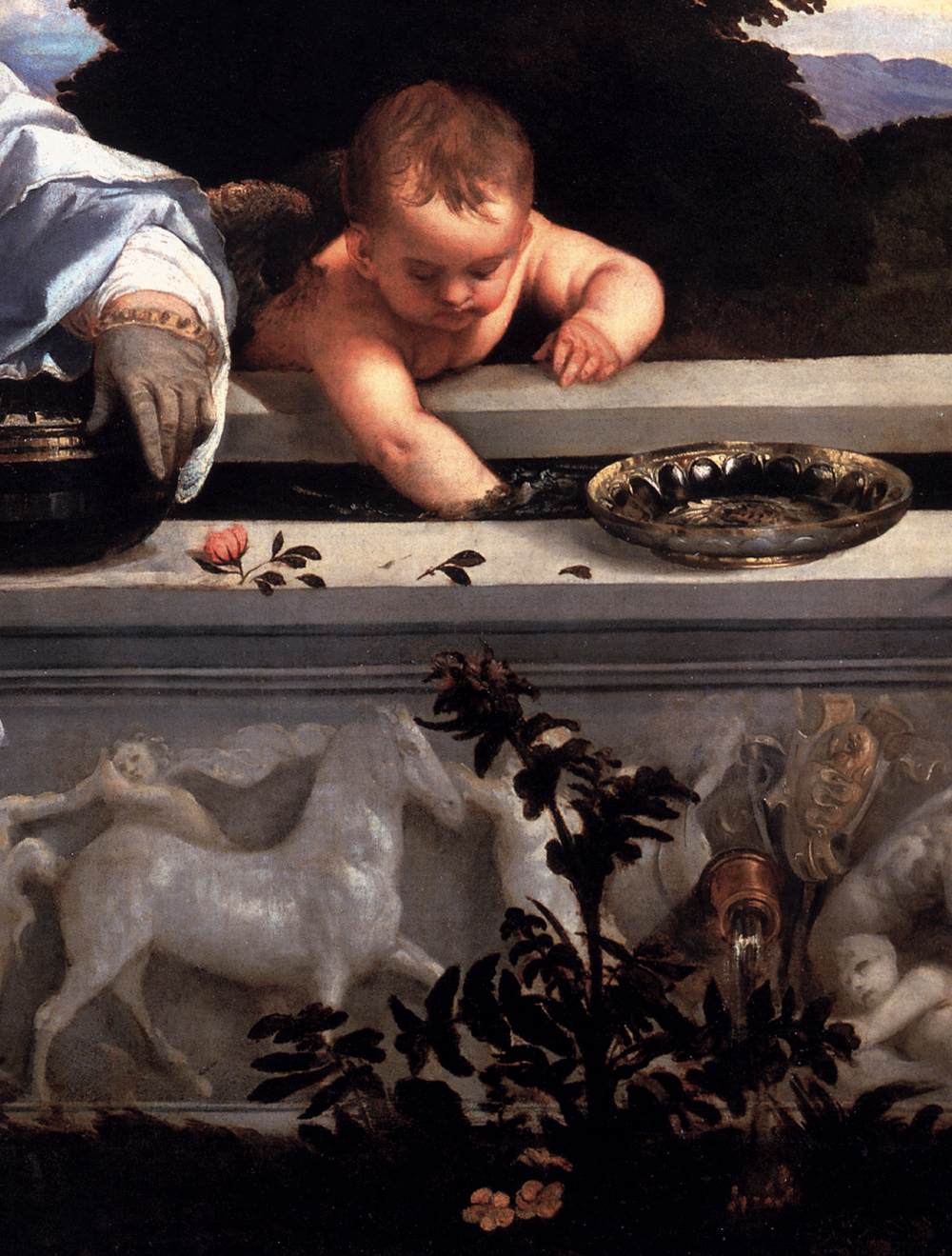
Then look at what they’re sitting on. That’s no carved-marble bench… that’s a sarcophagus. In other words, a coffin, of the type the ancient Romans used.

And it’s a strange sarcophagus, because it appears to be filled with water, which a cherubic baby is swirling.

Look even closer, and you can see a spout in the sarcophagus’ front, which the water is pouring out of and, seemingly, watering a growing plant below.

In the background, meanwhile, you have some other strange things going on: On our left, a horse and rider race up a mountaintop to a looming fortress, while two hares appear to be playing (or chasing each other); on our right, shepherds herd sheep in a pasture in front of a picturesque church, while a dog chases a hare.

Nothing that’s here is here by mistake. So what does it all mean?

We’re not sure. We have to rely on our knowledge of the painting’s symbols and hidden meanings to find out. And that’s because…

We don’t even know the real title of one of the most famous paintings in Europe

Although the piece is called Sacred and Profane Love, that’s not its original name. In fact, we don’t know what its original name was.

Here’s what we do know: Titian painted the piece in 1513-1514, at the age of just 25. And it was commissioned to celebrate the marriage of Niccoló Aurelio, a secretary to the Council of Venice, to Laura Bagarotto. No name is listed in the records for the painting, but in 1693, almost 200 years after it was painted, it showed up in the Borghese Gallery’s inventory under the name Amor Divino e Amor Profano (“divine love and profane love”).

…or what it’s supposed to show.

Sacred—or profane?
For a long time, art historians thought that the painting was supposed to show two different kinds of love: the sacred, and the profane.

It’s definitely safe to say the painting is about love. Symbols of love are scattered throughout, from the roses on the sarcophagus to the myrtle the woman on our left clasps (more on that later!). And, of course, the painting was a marriage gift, which would make this focus highly appropriate.

But does it show sacred and profane love? Well, if so, that might explain the background. The fortress, symbol of war and humanity, could symbolize the profane (or worldly); the church would, obviously, symbolize the sacred.

And it could explain the two women. Perhaps one is meant to be a Venus showing what worldly love looks like; the other, a Venus showing us sacred love.

But the interesting question is:

If this is true, then which of the two women represents sacred love, and which is the profane?

Is nudity actually a sign of
the sacred? (Maybe!)
At first glance, you might think the woman on our left represents sacred love. After all, she’s clothed! The other, naked one would, of course, represent worldly, amorous love.

Some aspects of each woman’s costume do back up that theory, because there are so many hidden symbols here! For example, the clothed woman’s belt was generally considered a symbol of marital ties; and the myrtle in her hand symbolized the lasting happiness of marriage. On the other hand, the nude woman’s flame symbolized earthly lust.

But look again, and you see just as much symbolism pointing us in the opposite direction. For one thing, the clothed woman is seated, and therefore below—and closer to the earth than—her nude counterpart. She’s wearing gloves for falconry, or hunting, and holding a case of jewels, both signs of worldly pursuits. And she’s dressed very sumptuously (and not all that modestly!), with rich fabrics and even a touch of cosmetics.

But heavenly beauty doesn’t need any worldly adornment. The nude woman, therefore, might be sacred.

The key could be Cupid, mixing the waters in the sarcophagus…

Water swirls in the sarcophagus…
and waters a growing plant?
Of course, that’s no baby between the two depictions of love (in this interpretation, two versions of Venus, goddess of love, herself): It’s Cupid. By mixing the waters in the well/sarcophagus, he might be suggesting that the ideal love is, in fact, a mix of these two kinds.

But this painting might not even be about sacred and profane love.

In the 20th century, art historian Walter Friedländer argued that the painting wasn’t about these two types of love at all. He thought it showed Polia and Venere, two characters in Francesco Colonna’s popular 1499 romance Hypnerotomachia Poliphili (don’t worry, there won’t be a test on that name!).

Another interpretation that’s much more simple… and makes a lot of sense? The painting could show the bride, Laura Bagarotto, herself, dressed in virginal white on the left. And the nude woman on the right? She might be Venus, initiating Laura into what love is like—complete with showing her the passion that’s necessary to make a marriage work (the torch).

But no one is sure what this painting really means. There’s a lot going on here, that’s for sure. And it’s kept art historians interested—and arguing!—for centuries

Wednesday, June 26, 2013

Magna Carta - 6000pc from Clementoni

Clementoni's Magna Carta. Magnificat color in this puzzle.
This is the first in our collection of 6000 piece maps and
our first big boy Clementoni.
Claes Janszoon Visscher's Magna Carta - 6000pc from Clementoni is brilliantly colored and printed on fine linen paper. The pieces feel fantastic in hand and have rounded knobs (versus for lack of a better word, ear shaped knobs). They are printed on blue board and look fantastic. I look forward to assembling this one.

It proved to be very difficult to find information about this piece of art on the web. Eventually I found a French blog where the author expressed the same problem I was having. Google returned nothing but results to buy a poster of it and almost no one gave an artists name. Well, it turns out, there is a lot of confusion.

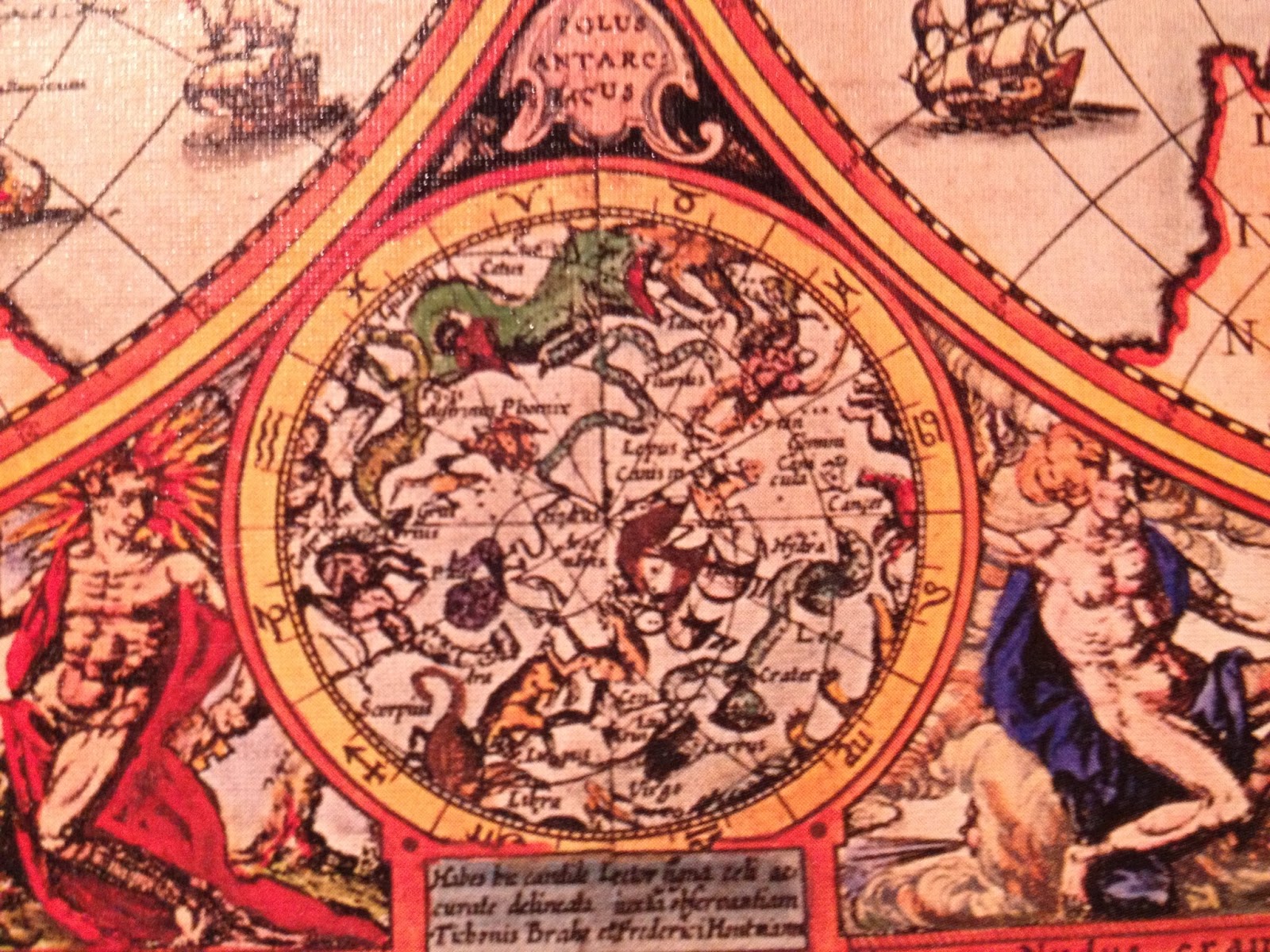
Claes Janszoon Visscher (a.k.a. Nicolaus Ioannis Vischerius or Nicolas Joannes Piscator) was born in 1587 in Amsterdam. His father Nicolas Visscher was a cartographer and taught him the family business. This map shows two hemispheres, separated at the Atlantic Ocean. The two smaller circles depict the signs of the zodiac. Flanking the upper zodiac are depictions of Terra and Aqua (Land and Water). The lower zodiac is flanked by Ignis and Aer (Fire and Air). The inner frame encapsulating the two globes represent the four seasons clockwise from the left: Ver, Aestas, Autumnus, Hiems (Spring, Summer, Fall and Winter).

The outer frame shows the 12 months of the year in the vertical columns and in the corners features prominent figures from history, clockwise from the upper left; Ninus, Cyrus the Great, Julius Ceaser, and Alexander the Great.

The top pane depicts each continent and the lower set of drawings illustrates the Charity (Mathew 25 versus 35 and 36); 
35 For I was hungry and you gave me something to eat, I was thirsty and you gave me something to drink, I was a stranger and you invited me in, 36 I needed clothes and you clothed me, I was sick and you looked after me, I was in prison and you came to visit me.’
One last piece of interesting trivia, Visscher means fisherman and the family signed their work by placing a fisherman somewhere. Can you find it? It took me a while! 

The following are close ups of the map showing each section discussed above.


Tuesday, June 25, 2013

New Puzzle Day Part II: How to NOT ship a puzzle

Wedding Feast shipped in
paper and totally fucked up...
With a gapping split, how confident
would you be the pieces were not
all over from here to Germany?
Another fantastic example of how NOT
to ship a puzzle.
Pieces rattling around the bottom of a
busted up open box... not  good sign.
Box wide open in the packing box...
At the very least, seal the box
with tape, better yet, put the pieces in
ziplock bags and seal the box!

So, today is a bittersweet. Three new puzzles showed up including the long awaited Wedding Feast at Cana, yet two out of the three showed up totally fucked up! Wedding feast was shipped in just the puzzle box wrapped in shipping paper all the way from Germany! When I picked it up at the post office, it was split at the seam and most likely had leaked pieces from here to Germany! This is seriously frustrating to wait over a month for a puzzle to find it in this condition.

The other new puzzle, the 6000pc Clementoni Magna Carta (Art. 36504) arrived in a crushed overpacked box (a box twice as large as it should have been) with the puzzle and loose pieces rattling around inside it. Overpacking a box is a good thing, but it needs to be secure inside the box. Not taping the puzzle box shut or placing the pieces in a sealed bag is another faux pas. It should be plainly obvious that you can't just ship these things like that but apparently not.

I really hope the remaining big boys on their way were packed with considerably more care. For now, I am debating on counting 15,000 pieces or just accepting that they are most likely missing pieces. I'm damned if I do and damned if I dont. It will take 16 hours to count all of them, but then again, if you are missing more than a few pieces, who would want to spend the dozens of hours required to build it?

I suppose people have a common misconception that the USPS cares about your package. They do not. I don't know what they do  to these boxes, but it is far from handling them with care! I know I will be explicit in all future puzzle purchases about how to package it correctly! 99% percent of the problems could be solved by sealing the pieces in some sort of bag. There is a reason they come from the manufacturer that way!

Enough bitching... All in all, this really sucks. It's a lesson to me that I need to communicate to people how to properly ship a puzzle here and if there are missing pieces (it is assumed there are) I will just perfect my technique of making my own pieces.
Wedding Feast at Cana

Paolo Veronese's Wedding Feast at Cana - 9000pc from Ravensburger is the puzzle that started it all for me. I have written about it a bunch here. I finished the majority of this puzzle maybe 10 years ago and it was destroyed in a move. So I am very much looking forward to getting it done finally.

The puzzle itself is of the same era as Tower of Babel and is printed on Ravi's green board (versus the blue board of today) and has shape features of that era as well (Limited knob diversity and location) but is well printed on fine linen paper with great color. A fine reproduction of the original art!

Magna Carta

There was so much to say about this puzzle, I moved it to its own  its own page here.


Here are some pics from todays haul. Enjoy!

At last, I have her back. She may be damaged, but I will get
her fixed up one way or another. The largest format
of Paolo Veronese's Wedding Feast at Cana.


Clementoni's Magna Carta has magnificant
coloring and the pieces appear to have
great dichotomy of knob curvature. I love
the blue cardboard. These pieces feel great!
Here are the pieces of Wedding Feast at Cana. As you can see, high quality on Ravi's old
style board. In the background is the claim form I suspect I will need to use!